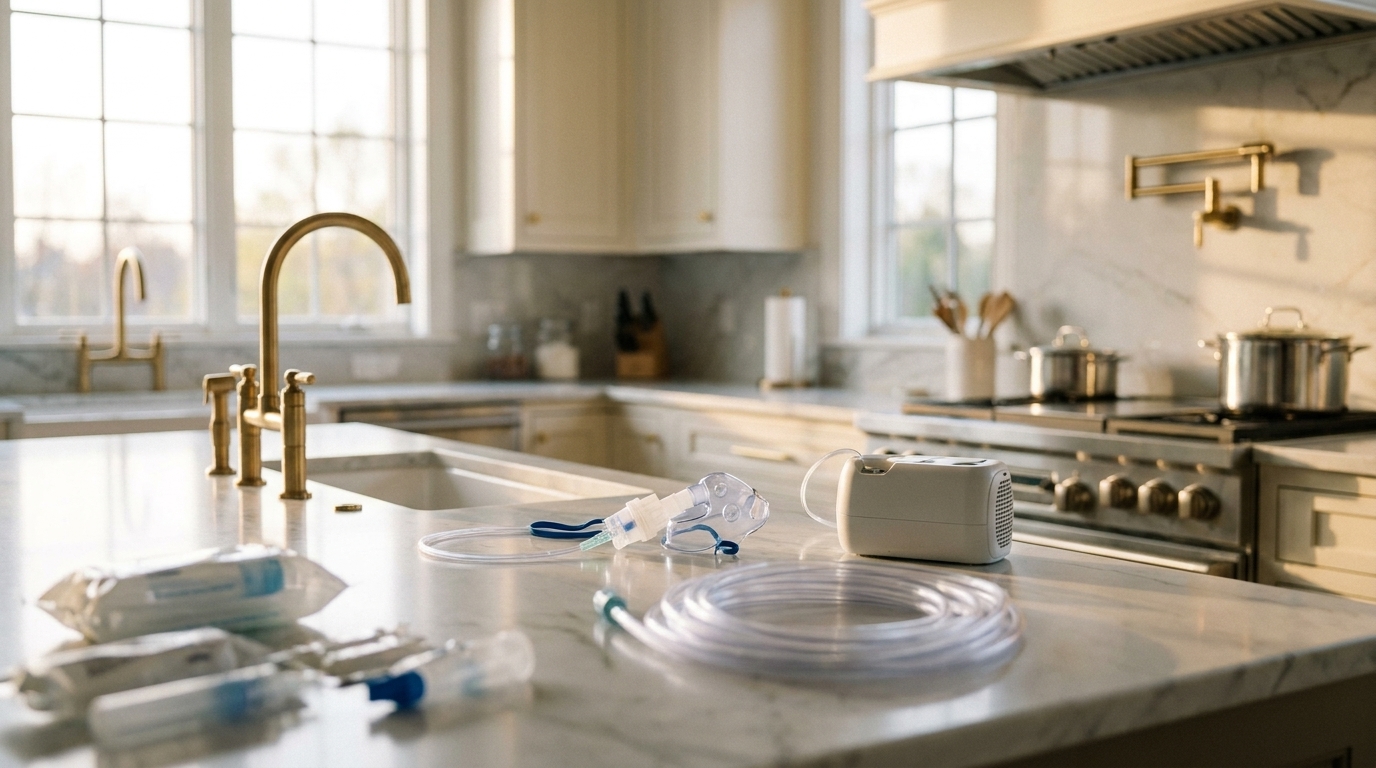
A cough assist machine mimics natural coughing to clear airways when ALS weakens breathing muscles, and early use with proper guidance prevents serious infections. Starting this therapy proactively helps people maintain independence, sleep better, and reduce anxiety while preserving time at home.
What Does a Cough Assist Machine Do and Why It Matters for ALS
Starting cough assist early helps you master the technique while your lungs are stronger, reducing pneumonia risk and keeping you home longer.
Understanding insufflation-exsufflation technology and airway clearance
A cough assist machine works by mimicking the two essential movements of a natural cough: a deep breath in, followed by a forceful breath out. The device delivers positive pressure to inflate the lungs — called the insufflation phase — then rapidly switches to negative pressure to pull air outward in the exsufflation phase. [1] That sudden pressure reversal generates high-speed airflow that moves mucus from deep in the airways toward the mouth, where it can be coughed out or removed by suctioning. [2] For people living with ALS, whose breathing muscles progressively weaken, this technology replaces the cough force the body can no longer produce on its own — helping clear the airways even when natural cough strength has significantly declined. [1]
How respiratory decline affects people living with ALS
ALS progressively weakens all three muscle groups involved in breathing — the inspiratory, expiratory, and [bulbar muscles](https://alsunited.org/blog/understanding-bulbar-als) — causing a steady decline in lung capacity and increasing the effort required to breathe. [4] Early signs of this decline are often subtle and easy to overlook: shortness of breath with mild activity, difficulty lying flat, morning headaches, disrupted sleep, and persistent fatigue. [3] As the disease advances, the inability to take deep breaths and the buildup of mucus can cause sections of the lungs to partially collapse — a condition called microatelectasis. [4] Respiratory failure is the most common cause of death in ALS, which is why recognizing early warning signs and acting on them matters so much. [3]
Why early intervention with cough assist can improve quality of life
Starting cough assist before respiratory symptoms become severe gives patients the advantage of learning proper technique while lung function is still adequate, making the therapy more effective over time. Proactive airway clearance reduces the risk of pneumonia and respiratory infections — two leading causes of hospitalization in ALS — which directly extends time at home and preserves independence. [5] Patients who begin early also report better sleep, reduced breathlessness during daily activity, and less anxiety around breathing difficulties. Working with [our care services team](https://alsunited.org/blog/our-care-services) early ensures you have the right equipment and technique in place before an acute need arises.
When to Start Using a Cough Assist Machine: Timing and Indicators
When your natural cough weakens and mucus builds up despite repeated attempts to clear it, your ALS care team can assess whether cough assist is the right next step.
Early warning signs that cough assist may benefit you
The most direct sign that cough assist may help is a weakening natural cough — specifically, when mucus builds up in your chest and repeated attempts to clear it produce little result. Recurrent chest infections, unexplained weight loss, and reduced appetite can also signal that breathing effort is increasing and secretion clearance is failing. [3] Pulmonary function testing, particularly forced vital capacity (FVC), helps track this progression; an FVC below 30% of predicted value indicates significant respiratory risk, which is typically when airway clearance support becomes critical. [3] Bringing these observations to your [ALS care team](https://alsunited.org/blog/what-type-of-doctor-treats-als-understanding-als-medical-care) gives clinicians the context to determine whether cough assist is the right next step.
When not to use cough assist: contraindications and safety considerations
Cough assist is contraindicated for people with raised intracranial pressure or those who have recently had upper gastrointestinal surgery, as the pressure shifts the device generates can worsen both conditions. [6] An undrained pneumothorax — a collapsed lung with trapped air that has not been medically drained — requires clinical review before use and is considered a precaution rather than an outright contraindication. [6] Never use a cough assist device while choking on a foreign object; the rapid pressure reversal can drive the obstruction deeper into the airway and create a serious emergency. [7] If vomiting occurs during a session, remove the mask immediately — outside of that, only remove it during the inhalation phase or the pause between breaths to avoid disrupting the therapy cycle. [7]
Working with your ALS care team to determine readiness
Determining readiness for cough assist is a clinical decision built on objective measurements tracked over time, not a single conversation. At each clinic visit, a respiratory therapist or nurse monitors breathing function and tracks key metrics like peak cough flow and forced vital capacity — assisted airway clearance is typically recommended when peak cough flow drops below 270 L/min. [9] If you don't have access to a specialized ALS clinic, a local care manager can connect you with a respiratory therapist who can perform the same evaluations. [8] Sharing changes in cough strength, sleep quality, and secretion clearance with your team gives clinicians the full picture needed to time the recommendation accurately. [9]
Cough Assist Usage Guide: Frequency, Duration, and Best Practices
Most people with ALS use a cough assist device twice daily to keep airways clear, with your respiratory therapist guiding any adjustments based on your individual needs.
How often should I use a cough assist machine: recommended schedules
Most people with ALS use a cough assist device at least twice daily — once in the morning and once in the evening — to keep the airways clear and lungs adequately inflated. [7] Manufacturer guidance specifies 2-3 cycles per session with 3-5 breaths per cycle, which typically takes only a few minutes to complete. [10] During a chest infection or a period of increased mucus production, sessions can be added throughout the day as needed to prevent secretion buildup, though muscles can tire from the additional effort, so pacing matters. [7] For medically stable patients without significant daily secretion issues, evidence supporting routine use beyond the standard twice-daily schedule is limited, so your respiratory therapist should guide any adjustments to frequency or cycle count. [10]
Step-by-step instructions for safe and effective use
Before starting a session, wash your hands, assemble the tubing and mask or mouthpiece, and confirm the device is plugged in and powered on — your respiratory therapist will have preset the pressure settings, which should not be adjusted on your own. [11] Hold the mask firmly against your face or place the mouthpiece securely in your mouth, then allow the machine to cycle through the positive pressure inhalation followed by the rapid negative pressure exhalation. [7] If secretions reach your mouth after a cycle, remove them with a tissue or suction before continuing. [7] Only remove the mask during the inhalation phase or the pause between breaths — never mid-exhalation — unless vomiting begins, in which case remove it immediately. [7]
Maintenance and care of your equipment
After each therapy session, clean the patient circuit — the tubing, handset, and mask or mouthpiece — with warm, soapy water and allow it to dry fully before the next use. [12] Once a week, remove the filter located on the back of the control unit, wash it with warm, soapy water, and let it dry completely before placing it back in the device. [12] Do not wash the Smart-Filter, which sits between the control unit and the tubing — this component should not be cleaned at all. [12] If you notice visible wear on tubing or interface components, contact your equipment provider before the next session to avoid any interruption in your airway clearance routine.
Cough Assist Machine Costs and Coverage: Medicare, Insurance, and ALS United Support
Medicare covers cough assist machines for ALS as durable medical equipment, with Part B paying 80% of rental costs during your first 13 months of therapy.
Does Medicare cover a cough assist machine: eligibility and documentation
Medicare covers a cough assist machine as durable medical equipment under Local Coverage Determination L33800, which classifies ALS under restrictive thoracic disorders — a qualifying condition for respiratory assist devices [13]. For coverage to begin, a treating practitioner must document symptoms of respiratory decline, such as excessive fatigue, morning headaches, or shortness of breath, in the patient's medical record [13]. Initial approval covers the first three months of therapy; continued coverage requires a re-evaluation no sooner than 61 days after starting, confirming the device is used an average of four hours per day and that the patient is benefiting from it [13]. People with ALS are exempt from Medicare's standard waiting period, meaning coverage can begin the first month they become eligible — though the documentation process requires careful coordination with your [care team familiar with ALS insurance requirements](https://alsunited.org/blog/medicare-medicaid-and-private-employer-insurance) [14].
Insurance coverage options and out-of-pocket cost considerations
Cough assist devices are covered as rental equipment for the first 13 months through Medicare, Medicaid, and most private insurance plans; after that period, the device becomes yours and supplies remain covered. [15] Medicare Part B pays 80% of the monthly rental cost, with the remaining 20% typically covered by Medicaid, a Medigap supplement, or secondary private insurance — without one of those, that 20% becomes your direct out-of-pocket responsibility. [15] If you carry a Medicare Advantage Plan, ask your plan specifically about durable medical equipment benefits, since coverage terms differ between plans. [15] Most private insurers also classify mechanical in-exsufflation devices as medically necessary DME for people with neuromuscular diseases including ALS, which means private coverage options exist beyond Medicare when documentation of medical necessity is in place. [16]
ALS United resources for equipment access and financial assistance
When insurance coverage leaves gaps in cough assist equipment costs, several supplemental programs exist to help. Our care team connects people living with ALS to national non-profit foundations and state assistive technology programs, both of which fund durable medical equipment — and some programs carry no income requirement. [18] Veterans with ALS may also qualify for equipment assistance through VA programs such as TRICARE for Life or CHAMPVA, which can cover Medicare co-payments and supply costs that would otherwise come out of pocket. [18] Calling 211 or using BenefitsCheckUp at benefitscheckup.org are practical starting points for locating financial assistance programs available in your specific community, including those that cover medical equipment, housing, and utilities. [17]
References
- The device alternates between two pressure phases. First, it applies positive pressure to the airway to inflate the lungs. This is the insufflation phase. Then it quickly switches to negative pressure to pull air out of the lungs. This is the exsufflation phase. The rapid change from positive to negative pressure creates high expiratory airflow. This flow helps shear mucus from the airway walls and move secretions from the lower airways toward the upper airway.
- Insufflation delivers positive pressure to inflate the lungs. Exsufflation applies rapid negative pressure to simulate a strong cough effort. MI-E devices are especially beneficial for airway clearance with MIE devices in patients with neuromuscular disorders, impaired respiratory muscle function, or secretion retention secondary to weak cough mechanisms.
- Respiratory failure is the most common cause of death from amyotrophic lateral sclerosis (ALS). Early signs and symptoms of respiratory muscle weakness are subtle: dyspnea with mild exertion, supine dyspnea, insomnia, morning headache, reduced appetite, weight loss, dizziness, depression, anxiety and marked fatigue.
- During disease course, all three muscular components of the respiratory system (inspiratory, expiratory and bulbar muscles) decline, leading to a progressive decline in vital capacity (VC) and an increase in the work of breathing. Rapid shallow breathing, the inability to take deep breaths and the retention of mucus causes microatelectasis and decreased lung and chest wall compliance.
- Proactive airway clearance through cough assist reduces the risk of pneumonia and respiratory infections, which are leading causes of hospitalization in ALS, supporting extended time at home and preservation of independence.
- Contraindications: Raised intracranial pressure (ICP), Recent upper GI surgery. Precautions: Undrained pneumothorax.
- IT IS DANGEROUS TO USE THE COUGH ASSIST WHEN CHOKING. YOU MAY CAUSE THE OBJECT TO MOVE FURTHER INTO THE AIRWAY CAUSING A SERIOUS OBSTRUCTION AND EMERGENCY SITUATION. NEVER remove the mask on the breath out. Only remove the mask on the positive breath in or during the Pause between breaths. The only time you need to remove mask immediately during therapy is if you start to vomit.
- If you do not live near an ALS clinic or cannot attend one, contact your local ALS Network care manager to ask if they can recommend a local neurologist who specializes in ALS or other medical professionals who can help.
- Assisted airway clearance is required when the peak cough expiratory flow rate drops below 270 L/min. Care for people with such complex conditions requires buy-in for these often time-consuming interventions and a team approach from the patient and caregiver and a multidisciplinary team that includes experienced respiratory therapists and a pulmonologist.
- Manufacturer recommendations for administering MI-E include insufflation and exsufflation parameters as high as +40 and -40 cm H2O, respectively, at least twice daily, 2-3 cycles each session, and 3-5 breaths per cycle. Currently, there is limited evidence supporting the daily use of MI-E in medically stable patients with NMD unless consistent or excessive production of secretions is present.
- Consult a Healthcare Professional: Discuss your intention to use a Cough Assist Machine by yourself with your healthcare provider. They can assess your condition and provide guidance on the appropriate settings and technique. Gather Supplies: Ensure you have all the necessary equipment ready, including the Cough Assist Machine, clean and properly-sized face mask or mouthpiece, tubing… Wash Hands: Always start by washing your hands thoroughly to maintain hygiene.
- We recommend that after each therapy session, you clean your patient circuit (comprising the tubing, handset and interface) with warm, soapy water. Once a week, you should wash the filter that is located on the back of the control unit in warm, soapy water. Allow it to thoroughly dry before you return it to the device. You should NOT clean the Smart-Filter (located between the control unit and the tubing).
- A RAD (E0470, E0471) is covered for those beneficiaries with one of the following clinical disorders: restrictive thoracic disorders (i.e., neuromuscular diseases or severe thoracic cage abnormalities)… the treating practitioner must fully document in the beneficiary's medical record symptoms characteristic of sleep-associated hypoventilation, such as daytime hypersomnolence, excessive fatigue, morning headache, cognitive dysfunction, dyspnea… a signed and dated statement completed by the treating practitioner no sooner than 61 days after initiating use of the device, declaring that the beneficiary is compliantly using the device (an average of 4 hours per 24 hour period) and that the beneficiary is benefiting from its use must be obtained by the supplier of the device for continued coverage beyond three months.
- persons with ALS are exempt from the usual waiting period before Medicare coverage can begin and therefore can receive benefits the first month they are eligible.
- Cough assist machines are considered rentals for the first 13 months and are covered through Medicare, Medicaid, and most private insurance plans. After 13 months, the machine becomes yours and your supplies will continue to be covered by your insurance. Medicare will cover 80% of the cost of your monthly rental. Medicaid, supplemental plans, and secondary private insurance should pay for the remaining 20%. If you have Medicare but do not have Medicaid, a supplemental plan, or secondary private insurance, you will likely have to pay the remaining 20% out of your own pocket. If you have a Medicare Advantage Plan, be sure to ask about your DME benefits.
- Aetna considers mechanical in-exsufflation devices medically necessary durable medical equipment (DME) for persons with a neuromuscular disease (e.g., amyotrophic lateral sclerosis, congenital myopathies, inclusion body myositis, muscular dystrophy, myasthenia gravis, poliomyelitis, progressive bulbar palsy, spinal muscular atrophy, high spinal cord injury with quadriplegia) that is causing a significant impairment of chest wall and/or diaphragmatic movement.
- 211 is the most comprehensive source of local social services in the U. S. and Canada. For help with housing, utilities, food, addiction treatment and other services, call 211 or visit the website. BenefitsCheckUp is a free service of the National Council on Aging that allows seniors to search a database of over 2,500 benefits programs nationwide, including medication, housing, food and nutrition and income assistance.
- Both national foundations and local non-profits offer assistance programs for home and durable medical equipment. Some programs limit their assistance to persons with specific conditions. Other programs have financial, but not functional requirements. Separate from their Medicaid programs, every state provides some form of assistance to elderly and disabled individuals in need of home or durable medical equipment. All states offer Assistive Technology Projects, which help with the acquisition of DME. The Department of Veterans' Affairs, either through insurance, grants, or other assistance programs, helps elderly veterans with the cost of medical equipment. Assistance may come from a variety of sources within the VA such as: TRICARE for Life, CHAMPVA for Life.